
Deep Plane Facelift
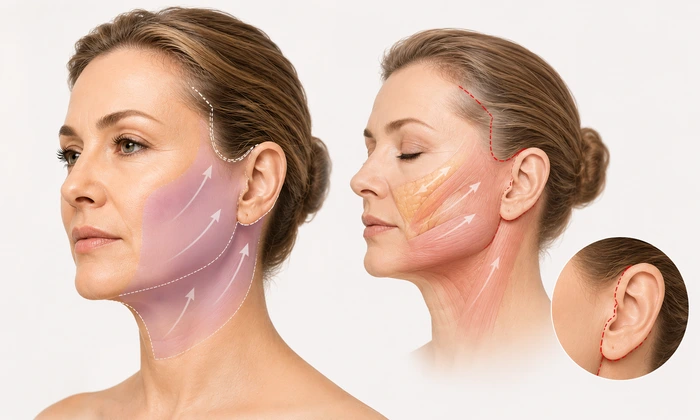
The deep plane facelift is the most comprehensive surgical approach to facial rejuvenation. Unlike techniques that tighten only the superficial layers, the deep plane method releases and repositions the deeper tissue structures — including the SMAS layer and the overlying fat compartments — as a single unit. This creates more natural-looking results that move with the face rather than appearing pulled.
It is particularly effective for patients with significant midface descent, deep nasolabial folds, and jowling. Results typically last 10–15 years.3 The trade-off is a longer operative time (4–6 hours), usually requiring general anaesthesia, and a longer recovery (2–4 weeks to social presentability).
Read the complete deep plane facelift guideSMAS Facelift
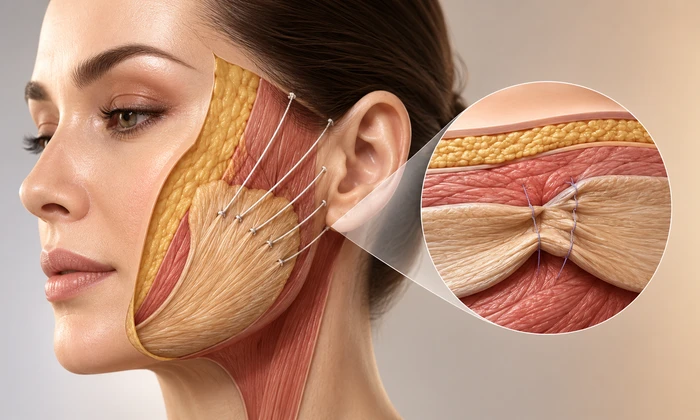
The SMAS (Superficial Musculoaponeurotic System) facelift is one of the most commonly performed facelift techniques worldwide. It works by tightening the SMAS layer through plication (folding and suturing) or SMASectomy (removing a strip). This provides more lasting and natural results than skin-only techniques while being less complex than deep plane surgery.2
The SMAS technique is effective for moderate jowling and neck laxity, representing a middle ground between mini and deep plane in terms of invasiveness, results, and recovery (2–3 weeks).
Read the complete SMAS facelift guideMini Facelift
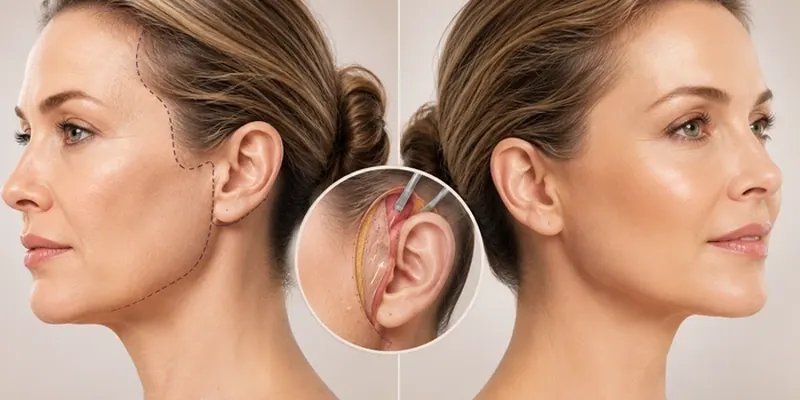
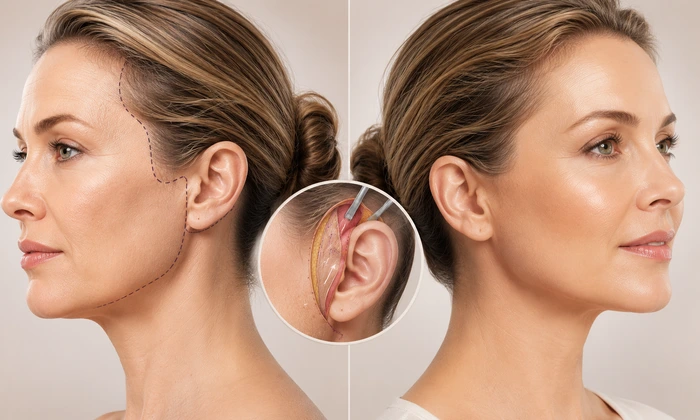
A mini facelift uses shorter incisions and less tissue dissection than a full facelift. It primarily targets the lower third of the face — the jawline and early jowling — making it appropriate for patients with early signs of ageing who don't yet need comprehensive surgery.1 Most mini facelifts are performed under twilight sedation, with a social downtime of 1–2 weeks. Results last 5–7 years.
Read the complete mini facelift guideMid-Facelift
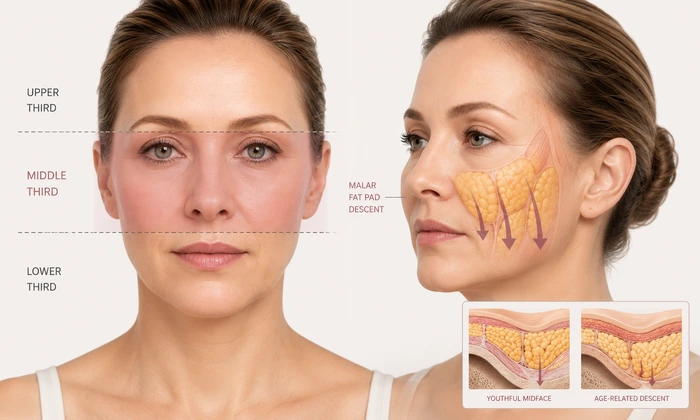
A mid-facelift specifically addresses the cheek area and the tissue between the lower eyelid and the mouth — the midface zone. It targets midface descent (flattening or drooping cheeks) rather than jowls or neck laxity.5 It is sometimes combined with other facelift techniques or lower blepharoplasty.
Read the mid-facelift guideFull Facelift
"Full facelift" is a scope descriptor, not a named surgical technique. It refers to a comprehensive procedure addressing the lower two-thirds of the face and neck in a single operation.1 Depending on the surgeon, a full facelift may use SMAS or deep plane technique — understanding which technique is planned is more informative than the "full" label.
Read the full facelift guideNon-Surgical Options
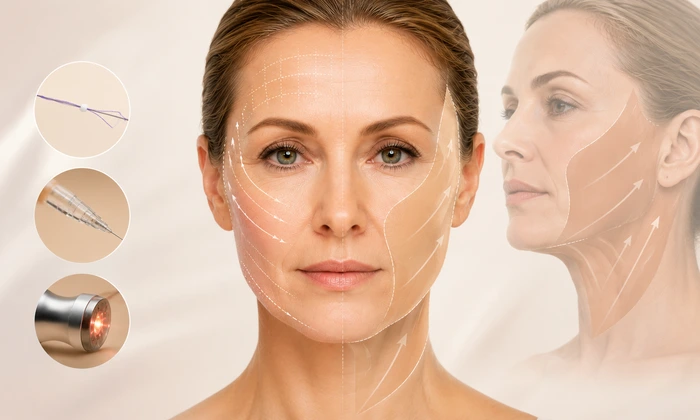
Non-surgical approaches include thread lifts, dermal fillers ("liquid facelift"), HIFU (high-intensity focused ultrasound), radiofrequency, and microneedling RF. These offer alternatives for patients not ready for surgery or with only mild concerns.4 None replicate the structural repositioning of surgical facelifts, and all require repeat treatments to maintain results.6
Explore non-surgical alternativesHow They Compare
| Feature | Deep Plane | SMAS | Mini | Non-Surgical |
|---|---|---|---|---|
| Best for | Significant sagging, midface + jowls + neck | Moderate jowls + neck | Early jawline sagging | Mild laxity, volume loss |
| Invasiveness | Most comprehensive | Moderate | Least invasive surgical | Non-invasive |
| Anaesthesia | General or deep sedation | General or sedation | Local / twilight | None or topical |
| Recovery | 2–4 weeks | 2–3 weeks | 1–2 weeks | 0–3 days |
| Results last | 10–15 years | 7–12 years | 5–7 years | 6–18 months |
| Cost (US) | $15,000–$30,000+ | $10,000–$18,000 | $6,000–$12,000 | $1,000–$5,000/session |
Ranges are approximate and vary by surgeon, location, and individual case. Published ASPS statistics provide general surgeon-fee context but do not replace an itemized quote. See the full detailed comparison →
Frequently Asked Questions
-
The deep plane facelift generally produces the longest-lasting results — typically 10–15 years — because it repositions the deeper tissue structures rather than just tightening the surface skin.3
-
Among surgical options, the mini facelift is the least invasive. For non-surgical alternatives, thread lifts and filler-based approaches require no incisions, though results are temporary and limited.
-
The right technique depends on your degree of facial ageing, the areas to address, your health, and recovery tolerance. A board-certified facial plastic surgeon assesses your anatomy during consultation and recommends the most appropriate approach. Our candidacy guide and comparison page can help you prepare for that conversation.
-
Yes. Surgeons often combine techniques — for example, a deep plane facelift with a neck lift, or a mini facelift with fat grafting — to address multiple areas in a single procedure. Some patients also combine a facelift with blepharoplasty (eyelid surgery) or brow lift.