
Journey Timeline Overview
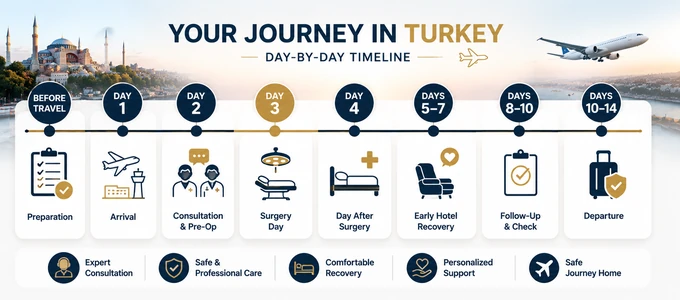
The following timeline reflects a typical deep plane or SMAS facelift journey. Mini facelift patients may have a shorter required stay (7–10 days).
| Day | Stage | Key Activity |
|---|---|---|
| Before travel | Preparation | Remote consultation, pre-op tests at home, stop medications |
| Day 1 | Arrival | Airport transfer, hotel check-in, rest |
| Day 2 | In-person consultation & pre-op | Meet surgeon in person, final pre-op blood work if needed, consent forms |
| Day 3 | Surgery day | Fast from midnight, arrive clinic, procedure, overnight clinic stay |
| Day 4 | Day after surgery | Post-op check, drain removal if applicable, transfer to hotel |
| Days 5–7 | Early hotel recovery | Rest, head elevated, follow wound care instructions, first suture removal |
| Days 8–10 | Follow-up | Surgeon check, remaining suture removal, travel clearance assessment |
| Days 10–14 | Departure | Final check, fly home (surgeon-cleared) |
Stage 1: Before You Travel
What you do before boarding the plane significantly affects your surgical outcome and recovery. This stage should begin at least 4–6 weeks before your surgery date.
Remote Consultation
A video consultation with your surgeon should take place before any booking is finalized. The surgeon reviews photos you've submitted, confirms the recommended technique, and answers your questions. This is not a formality — it establishes the clinical plan and gives you the opportunity to assess whether you're confident in the surgeon's judgment.
Pre-Operative Medical Clearance at Home
Most Turkish clinics require pre-operative results before your arrival — some will arrange local tests on arrival, but completing them at home avoids delay and allows more time for any unexpected findings to be addressed. Typically required:
- Full blood count and coagulation screen
- Basic metabolic panel
- ECG (if over 40 or with cardiac history)
- Physician sign-off confirming you are fit for elective surgery under anesthesia
Medication and Lifestyle Changes
- Stop smoking at least 4 weeks before surgery — nicotine severely impairs wound healing and significantly increases complication risk
- Stop aspirin and NSAIDs (ibuprofen, naproxen) at least 2 weeks before — these increase bleeding risk
- Stop blood-thinning supplements (fish oil, vitamin E, ginkgo, garlic in high doses) 2 weeks before
- Avoid alcohol for at least 1 week before surgery
- Confirm with your surgeon any prescription medications you take — some require adjustment or discontinuation
Travel Insurance
Standard travel insurance often excludes complications from elective surgery. Purchase a policy that explicitly covers surgical complications abroad before confirming your booking. Read the terms — not just the marketing description.
Stage 2: Arrival and Consultation
Your clinic's patient coordinator should arrange airport pickup. Day 1 is typically for arrival, hotel check-in, and rest — your body needs to recover from travel before surgery. Avoid alcohol on arrival and keep food and fluid intake sensible.
Day 2 is your in-person consultation with the surgeon. This confirms the surgical plan, reviews your pre-op results, and completes consent documentation. Use this consultation to ask any remaining questions — this is your last opportunity before surgery.
If any pre-op tests weren't completed at home, they are done now. Results are usually available the same day or overnight.
Stage 3: Surgery Day
You will fast from midnight the night before (no food or drink, including water, unless specifically instructed otherwise). Your coordinator will confirm the arrival time at the clinic — typically early morning.
On arrival you will change into a surgical gown, complete any remaining paperwork, and meet your anesthesiologist for a pre-operative assessment. The anesthesiologist will review your health history and confirm the anesthesia plan.
Surgery duration depends on the technique: 1.5–2.5 hours for a mini facelift, 3–4 hours for SMAS, 4–6 hours for deep plane. After surgery you will spend time in the recovery room until the anesthesia team is satisfied with your vital signs and consciousness level, then be transferred to your room.
Most patients feel groggy and uncomfortable on surgery day but describe the experience as more manageable than expected. Pain is typically described as tightness and pressure rather than sharp pain, and is well-controlled with prescribed medication.
Stage 4: Clinic Recovery (Days 1–2 Post-Surgery)
You will spend 1–2 nights in the clinic following surgery. During this time:
- Nursing staff monitor vital signs and wound status regularly
- Drains (if placed) are monitored and typically removed on day 1–2
- Head elevation is maintained — you will be positioned with the head raised at 30–45 degrees
- Pain and nausea are managed with IV or oral medication
- Your surgeon will visit for a post-operative check
- You may have bandaging around the face and neck that will be adjusted before discharge
Expect significant swelling and bruising — this is normal and expected. Swelling peaks at days 2–3 and begins to subside through the first week.
Stage 5: Hotel Recovery (Days 3–9)
After clinic discharge, you transfer to your hotel for the majority of your recovery. This phase requires patience — your job is to rest and follow wound care instructions.
What to Expect
- Swelling and bruising are prominent through day 5–6, then begin to visibly improve
- Keep your head elevated, including while sleeping — bring or request extra pillows
- Short, gentle walks within the hotel are encouraged from day 3 onward to reduce DVT risk — no strenuous activity
- Wound care instructions from your clinic must be followed precisely — cleaning, dressing, and what not to touch
- Your coordinator remains available for questions and clinic transport
Day 5–7: First Suture Removal
A clinic appointment around days 5–7 is standard for partial or full suture removal. This visit also allows the surgeon or nurse to assess healing and address any concerns. Most patients feel significantly better by this point compared to days 1–3.
Stage 6: Flying Home Safely
Most surgeons advise waiting at least 10 days before flying after a facelift. The medical reasons are specific:
- DVT (deep vein thrombosis) risk: CDC notes that long-distance travel can increase blood-clot risk, especially when other risk factors are present.1 Recent surgery is one reason to follow your surgeon's flight timing and compression/walking advice closely.
- Swelling: Cabin pressure and dry air can worsen swelling. Flying too soon may make your recovery more uncomfortable and potentially affect healing.
- Wound integrity: Sutures should be removed and wounds assessed as sufficiently healed before long travel.
Your surgeon will clear you to fly at your final pre-departure appointment. Do not book a return flight before this clearance is confirmed — and leave flexibility in your ticket for the possibility of an extended stay if recovery is slower than expected.
Stage 7: Follow-Up After You Return Home
Facelift recovery continues after the initial bandages, swelling, bruising, and early follow-up period.3 Arrange a local follow-up with a GP or physician who can monitor your healing and contact your Turkish surgeon if needed. Most reputable clinics provide a contact protocol for international patients post-return — confirm this before departure.
Social downtime (when most patients feel comfortable in public) is typically 2–3 weeks for SMAS and mini, 3–4 weeks for deep plane. Final results develop gradually over 3–6 months as residual swelling resolves and scars mature.
Full facelift recovery timeline: week by week 1 week post-op: what's normal and what's not