



Facelift Risks & Complications
All surgery carries risk. Understanding the specific risks of facelift surgery — and how they are minimised — helps you make an informed decision and recognise problems early.1
| Complication | Rate | Notes |
|---|---|---|
| Haematoma | 1–3%2 | Most common; more frequent in men and hypertensive patients; requires prompt drainage |
| Temporary nerve weakness | 0.5–2.5% | Usually resolves within weeks to months |
| Permanent nerve injury | <1%3 | Rare; risk higher with inexperienced surgeons |
| Wound infection | 0.3–1% | Correlated with facility hygiene and patient smoking |
| Skin necrosis | <1% | Significantly higher in smokers |
| Hypertrophic scarring | 1–3% | Affected by technique and skin type |
Am I a Good Candidate?
The ideal facelift candidate is in good general health, a non-smoker (or willing to stop 4–6 weeks before and after surgery), at a stable weight, with realistic expectations, and the specific facial ageing concerns that facelift addresses: jowling, neck laxity, or midface descent.
Key factors that affect candidacy or increase surgical risk:
- Smoking — significantly increases skin necrosis risk; cessation is required
- Uncontrolled hypertension — primary risk factor for haematoma
- Blood thinners — aspirin, warfarin, and many supplements must be stopped pre-operatively
- Diabetes — impairs wound healing; must be well-controlled
- Unrealistic expectations — as important as medical fitness; assessed during consultation
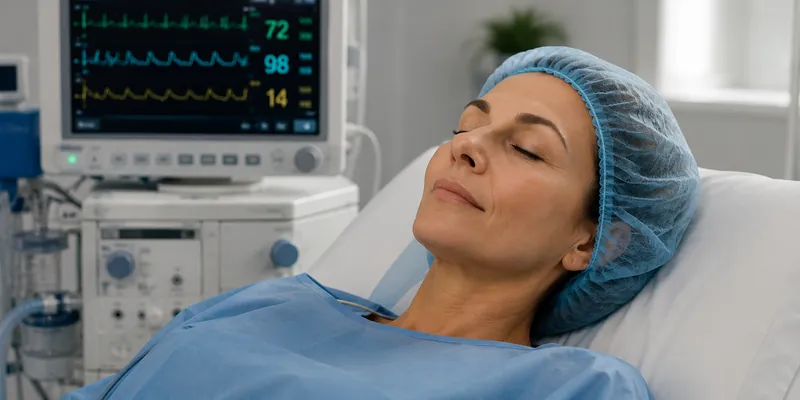
Anaesthesia Options
| Type | Consciousness | Best For | Recovery |
|---|---|---|---|
| Local only | Fully awake | Limited mini facelifts | Fastest; no grogginess |
| Twilight sedation | Deeply sedated; responsive | Mini, SMAS, some deep plane | Less nausea; fast recovery |
| General anaesthesia | Fully unconscious | Deep plane, complex/long procedures | Longer; more nausea risk |
Verifying Surgeon Credentials
The surgeon's skill and experience are the most important safety factors — more impactful than the country, the clinic's appearance, or the package price. Before committing to a surgeon, verify:
- Board certification in plastic surgery or facial plastic surgery (ABPS, ABFPRS, or national equivalent)
- Facility accreditation — JCI or national equivalent for the operating facility
- Facelift-specific surgical volume — how many procedures of your specific type per year
- Before/after results with a range of patients, ideally at 6–12 months post-op
- Complication and revision policy — a credible surgeon discusses this openly
Frequently Asked Questions
-
Facelifts have a well-established safety profile with qualified surgeons. Serious complications are uncommon. The most common issue, haematoma, occurs in 1–3% of cases and is treatable. Permanent nerve injury affects less than 1% of patients. The key factors are surgeon experience and facility quality.
-
Twilight sedation generally has a lower side-effect profile — less nausea, faster recovery from the anaesthesia itself, and fewer cardiovascular effects. However, not all facelift procedures can be safely performed under twilight sedation. The right choice depends on procedure type, expected duration, and the patient's health.
-
There is no single best age. Candidacy depends more on tissue quality and degree of ageing than chronological age. Most facelift patients are between 40 and 70, but the right timing is individual. A surgeon's assessment of your specific anatomy is the deciding factor.