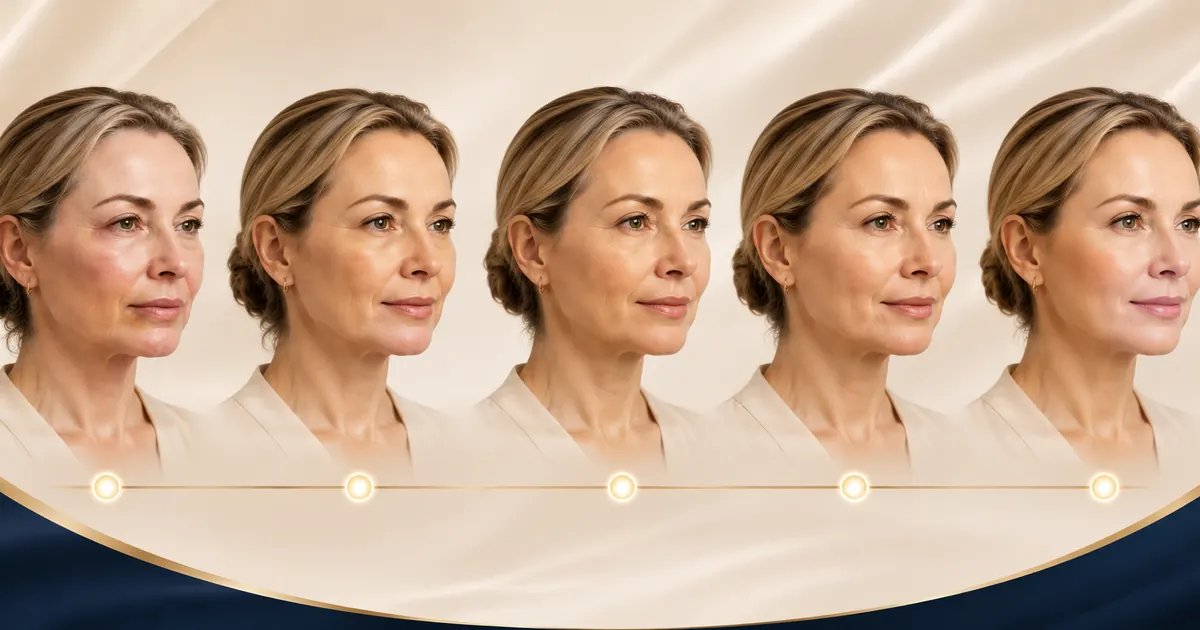
Why Do Swelling and Bruising Happen After a Facelift?
Swelling and bruising are the body's natural response to surgical tissue disruption:
- Swelling (oedema): When tissue is dissected during surgery, the body sends inflammatory cells and fluid to the area to begin the healing process. This fluid accumulation creates the visible swelling you see. It is a sign of active healing.
- Bruising (ecchymosis): Small blood vessels disrupted during surgery leak blood into the surrounding tissue. The blood is gradually reabsorbed by the body, changing colour as it breaks down — progressing from dark purple/blue to green to yellow before disappearing.
The extent of swelling and bruising generally follows the extent of surgical dissection. A larger facelift can involve more visible swelling than a limited mini facelift, while large outcomes datasets are more useful for tracking adverse events across facelift patients3 than predicting an individual swelling pattern. This is expected and does not indicate a problem.
Swelling Timeline: What to Expect
| Timeframe | Swelling Level | What It Looks Like |
|---|---|---|
| Day 1 | Moderate, increasing | Face feels tight and puffy; bandages in place |
| Day 2–3 | Peak swelling | Maximum puffiness — this is the worst it will look |
| Day 4–7 | Gradually decreasing | Visible improvement each day; face shape emerging |
| Week 2 | Significantly reduced | Presentable with makeup; most obvious swelling gone |
| Week 3–4 | Mild residual | Others unlikely to notice; you may see subtle puffiness |
| Month 2–3 | Deep tissue resolving | ~80% of final result visible; subtle refinement continuing |
| Month 6 | Fully resolved | Final result visible; all tissue settled |
Important: Swelling may appear asymmetric — one side may swell more than the other. This is common and does not indicate a problem. The face is not perfectly symmetrical, and swelling patterns vary. Judge symmetry at 3+ months, not during the first few weeks.
Bruising Timeline
| Timeframe | Bruise Colour | What's Happening |
|---|---|---|
| Day 1–3 | Dark red/purple | Fresh blood beneath the skin; most intense appearance |
| Day 4–7 | Blue/dark purple | Blood starting to break down; haemoglobin changing |
| Day 7–10 | Green/brown | Biliverdin stage — body actively reabsorbing |
| Day 10–14 | Yellow/light brown | Final stage before resolution; easily concealed with makeup |
| Day 14–21 | Fading/resolved | Fully reabsorbed in most patients |
Bruising often migrates downward due to gravity — you may notice bruising on your neck or upper chest even though the surgery was on your face. This is normal and follows the same resolution timeline.
Swelling and Bruising by Technique
| Factor | Mini Facelift | SMAS Facelift | Deep Plane |
|---|---|---|---|
| Peak swelling | Day 2 | Day 2–3 | Day 2–3 |
| Visible swelling resolves | 10–14 days | 2–3 weeks | 3–4 weeks |
| Bruising resolves | 7–14 days | 10–18 days | 14–21 days |
| Residual deep swelling | 2–3 months | 3–4 months | 4–6 months |
| Socially presentable | 10–14 days | 2–3 weeks | 3–4 weeks |
Evidence-Based Tips to Reduce Swelling
Most Effective
- Head elevation: Sleep and rest with your head at 30–45 degrees for the first 2 weeks. This is the single most effective strategy — gravity helps fluid drain away from the surgical area. Use a wedge pillow or stack of pillows.
- Cold compresses: Apply as directed by your surgeon during the first 48 hours. Use a cloth barrier between the cold pack and your skin. Cold constricts blood vessels and reduces inflammatory fluid.
- Compression garment: Wear as prescribed — the gentle pressure supports tissue positioning and helps reduce fluid accumulation.
Supportive Measures
- Hydration: Drink plenty of water — dehydration worsens swelling
- Low-sodium diet: Excess salt promotes fluid retention — reduce sodium intake for the first 2 weeks
- Avoid alcohol: Alcohol dilates blood vessels and increases swelling — avoid for at least 2 weeks
- Gentle walking: Light movement promotes circulation and helps reduce fluid retention
- Avoid bending over: Bending increases blood pressure in the head and worsens swelling
- Avoid heat: Hot showers, saunas, and direct heat on the face increase swelling
Supplements (Mixed Evidence)
- Arnica: Some patients and surgeons report benefit for reducing bruising. Scientific evidence is mixed. Generally considered safe if used as directed — discuss with your surgeon.
- Bromelain: An enzyme found in pineapple with anti-inflammatory properties. Some evidence supports modest benefit for post-surgical swelling. Discuss with your surgeon.
Tips to Reduce Bruising
- Stop blood thinners pre-operatively: Your surgeon will instruct you to stop aspirin, ibuprofen, fish oil, and certain supplements 1–2 weeks before surgery. These increase bleeding and bruising.
- No alcohol: Before and after surgery — alcohol impairs clotting and increases bruising.
- No smoking: Smoking constricts blood vessels, impairs healing, and can worsen bruising outcomes.
- Cold compresses: Help limit bruising when applied during the first 48 hours.
- Concealer makeup: Green-tinted concealer neutralises purple/blue bruises. Yellow-tinted concealer works on green/yellow-stage bruises. Most patients can effectively conceal bruising by day 10–14.
Normal vs. Concerning: When to Call Your Surgeon
Normal — Do Not Worry
- Bilateral (both sides) swelling that peaks at 48–72 hours and gradually decreases
- Slight asymmetry in swelling — one side may resolve faster than the other
- Bruising that migrates downward to the neck or chest
- Mild tightness, numbness, or tingling sensation
- Swelling that temporarily increases slightly with activity and improves with rest
- "Morning face" — slightly more swelling in the morning that improves during the day
Contact Your Surgeon
- Sudden, significant one-sided swelling: This is the hallmark sign of a hematoma (blood collection beneath the skin)1. This is the most urgent post-facelift concern — contact your surgeon immediately. Hematomas are treatable but require prompt attention.
- Swelling that increases after day 3: Normal swelling peaks at 48–72 hours and decreases afterward. Swelling that worsens after this point may indicate a complication.
- Fever above 38°C (100.4°F): May indicate infection.
- Foul-smelling discharge from incisions: Sign of possible infection.
- Severe, worsening pain: Pain should decrease over time, not increase.
- Skin colour changes near incisions: Darkening, blanching, or blue/black discolouration beyond normal bruising.
When in doubt, contact your surgeon. They would rather assess a normal finding than miss a complication2.